≥99% PURITY GUARANTEEDTHIRD-PARTY TESTEDSAME-DAY SHIPPING USAFREE SHIPPING $200+
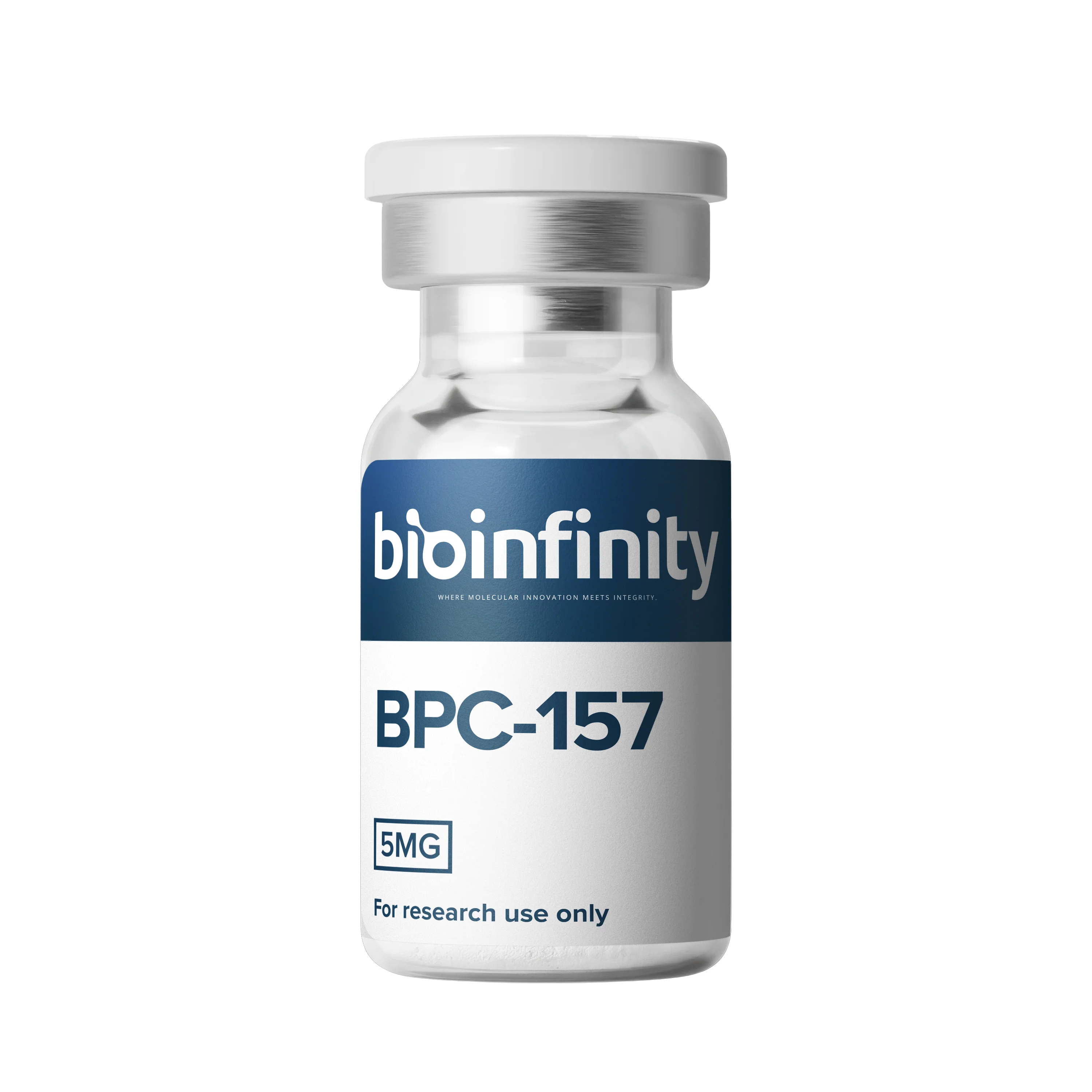
BPC-157 - 5 mg
Recovery & Repair

BPC-157

Body Protection Compound-157 — extensively researched for tissue repair, tendon/ligament healing, and gut protection.

$40.00
99.89% Purity Verified

Third-Party Tested by Verum Analytics

Batch: BIL-BATCH-01-2602Mar 1, 2026
+99% Purity
Third-Party Tested
COA Available
21 sold in the last 24 hours
Order in 0h 0min for same-day shipping
Buy More, Save More
QuantityPrice
Add 2 more for 15% off
$40.00
Albert - Chief Researcher

Albert's Verdict

BPC-157 remains the most-studied gut-brain axis peptide in our catalog. The angiogenesis and nitric oxide pathway data across multiple independent labs is remarkably reproducible — that's rare in peptide research.

View COA

✓ In stock - Ships same day

Arrives as lyophilized (powder) form

Shipped freeze-dried for maximum stability and shelf life. See laboratory preparation guide for handling instructions.

Secure Checkout256-bit SSL
99%+ PurityThird-Party Verified
Same-Day ShippingOrder by 2PM EST
Satisfaction Guarantee

Product Description

BPC-157 (Body Protection Compound-157) is a synthetic pentadecapeptide derived from a protective protein naturally found in human gastric juice. It is one of the most extensively studied peptides in regenerative research, with published data supporting accelerated healing of tendons, ligaments, muscles, and bone, along with strong anti-inflammatory and gastrointestinal-protective effects.

BPC-157 is stable, well-tolerated in animal models, and works locally at the injury site to promote angiogenesis (new blood-vessel growth) and collagen production. Popular among researchers studying recovery, wound healing, and tissue repair. For research use only. Not for human or veterinary consumption.

Technical Specifications

Molecular Formula
C62H98N16O22
Molecular Weight
1419.53 g/mol
Sequence
Gly-Glu-Pro-Pro-Pro-Gly-Lys-Pro-Ala-Asp-Asp-Ala-Gly-Leu-Val

About BPC-157

BPC-157 (Body Protection Compound-157) is a synthetic pentadecapeptide derived from a protective protein found naturally in human gastric juice. Consisting of 15 amino acids with the sequence Gly-Glu-Pro-Pro-Pro-Gly-Lys-Pro-Ala-Asp-Asp-Ala-Gly-Leu-Val, BPC-157 has emerged as one of the most extensively researched peptides in cellular-pathway research. Originally isolated by Professor Predrag Sikiric at the University of Zagreb, this peptide has been the subject of numerous preclinical investigations examining its potential protective and cellular-pathway properties in various tissue types.

Mechanism of Action

BPC-157's biological activity involves multiple interacting pathways that researchers believe contribute to its observed effects in experimental models:

Nitric Oxide System Modulation: Research suggests BPC-157 may interact with the nitric oxide (NO) system, potentially influencing blood vessel formation and cellular pathway processes. Studies indicate it may help regulate NO synthase activity.

Growth Factor Upregulation: Laboratory studies have observed increased expression of growth factors including VEGF (vascular endothelial growth factor), EGF (epidermal growth factor), and FGF (fibroblast growth factor) in BPC-157-treated tissue samples.

FAK-Paxillin Pathway: Research indicates BPC-157 may activate the focal adhesion kinase (FAK) pathway, which plays a crucial role in cell migration, adhesion, and tissue organization during healing processes.

Dopaminergic System Interaction: Studies suggest potential interactions with the dopaminergic system, which may explain some of the observed effects in neurological research models.

GABAergic System Effects: Some research indicates BPC-157 may influence GABA receptor function, contributing to its observed effects in gut-brain axis studies.

Research Highlights

Gastrointestinal Studies

BPC-157 was originally studied for its gastric protective properties. Research has examined its effects on various GI conditions in animal models, including gastric ulcers, inflammatory bowel conditions, and esophageal damage. Studies suggest it may promote mucosal integrity and accelerate healing in damaged GI tissue.

Musculoskeletal Research

Extensive preclinical studies have investigated BPC-157's effects on tendons, ligaments, and muscle tissue. Research in rat models has shown accelerated healing of transected Achilles tendons, quadriceps muscles, and various ligaments. Studies suggest enhanced collagen organization and accelerated functional recovery.

Wound-Model Research

Research has examined BPC-157's effects on various wound types, including burns, incisions, and diabetic wounds. Studies report enhanced angiogenesis (blood vessel formation), accelerated granulation tissue formation, and improved wound closure rates in experimental models.

Neurological Research

Emerging research has explored BPC-157's potential neuroprotective properties. Studies in animal models have examined effects on peripheral nerve injuries, traumatic brain injury, and various neurotoxicity models. Some research suggests potential dopaminergic system interactions.

Product Specifications

Molecular FormulaC₆₂H₉₈N₁₆O₂₂
Molecular Weight1419.53 g/mol
SequenceGly-Glu-Pro-Pro-Pro-Gly-Lys-Pro-Ala-Asp-Asp-Ala-Gly-Leu-Val
Purity≥99% (HPLC verified)
FormLyophilized powder
AppearanceWhite to off-white powder
SolubilitySoluble in water, bacteriostatic water
Storage-20°C (lyophilized), 2-8°C (reconstituted)

Research Usage Guidelines

Reconstitution Protocol

  1. 1Allow vial to reach room temperature (15-20 minutes)
  2. 2Use bacteriostatic water or sterile water for injection
  3. 3Add solvent slowly down the vial wall—do not spray directly on powder
  4. 4Gently swirl to dissolve—do not shake or vortex
  5. 5Solution should be clear and colorless

Storage Guidelines

  • Lyophilized: Store at -20°C, stable for 2+ years
  • Reconstituted: Store at 2-8°C, use within 4 weeks
  • Protect from light and repeated freeze-thaw cycles
  • For long-term storage of reconstituted peptide, aliquot into single-use portions

Frequently Asked Questions

BPC-157 is a synthetic 15-amino acid peptide derived from a naturally occurring protein in human gastric juice. It has been extensively studied in preclinical research for its potential protective and cellular-pathway properties in various tissue types.

Research References

  • [1] Sikiric P, et al. Brain-gut Axis and Pentadecapeptide BPC 157. Curr Neuropharmacol. 2016;14(8):857-865.
  • [2] Seiwerth S, et al. BPC 157's effect on healing. J Physiol Pharmacol. 2018;69(6).
  • [3] Gwyer D, et al. Gastric pentadecapeptide body protection compound BPC 157 and its role in accelerating musculoskeletal soft tissue healing. Cell Tissue Res. 2019;377(2):153-159.
  • [4] Chang CH, et al. The promoting effect of pentadecapeptide BPC 157 on tendon healing. Int Orthop. 2011;35(3):421-426.

Learn More

Explore our comprehensive research guides for detailed information on peptide handling, storage, and research protocols.

Frequently Researched Together

Commonly studied alongside in laboratory settings

Bundle total (3 items):$117.00

Research FAQ — BPC-157

Frequently asked questions about this compound for laboratory researchers.

What is BPC-157 and what does research suggest about its mechanism?+
BPC-157 is a synthetic pentadecapeptide (15 amino acids) derived from a protective protein found in gastric juice. Published data on rodent models indicate research into angiogenesis modulation, cytoprotection, and nitric oxide pathway interactions. For research use only — not for human or veterinary use.
What dosing has been used in published BPC-157 research?+
In peer-reviewed rodent studies, doses commonly range from 10–500 µg/kg administered intraperitoneally or subcutaneously. Researchers should refer to the cited literature and consult their IRB-approved protocols.
What is the reported half-life of BPC-157 in research literature?+
Published pharmacokinetic data on BPC-157 in rodent models suggest a short plasma half-life, often cited at under 30 minutes when administered subcutaneously. Research outcomes are typically attributed to downstream signaling rather than direct plasma persistence.
How should BPC-157 be stored in a research setting?+
Lyophilized BPC-157 should be stored at −20 °C protected from light. Once reconstituted with bacteriostatic water, researchers commonly refrigerate at 2–8 °C and use within 30 days. Confirm storage with your laboratory's SOP.
Is BPC-157 third-party tested for purity?+
Every BPC-157 lot shipped by BioInfinity Lab is HPLC + MS-tested by Janoshik Analytical with a Certificate of Analysis (COA) referenced on the product page. Typical purity reported: ≥99%.

Published research references

Peer-reviewed literature relevant to BPC-157 research. Linked PubMed IDs open the original source.

  1. [1]BPC-157 and the gut-brain axis: a pleiotropic cytoprotective agent — Biomedicines (2021) · PMID 33391174
  2. [2]Pentadecapeptide BPC 157 enhances the healing process of the transected rat sciatic nerve — Regen Med (2014) · PMID 24426587
  3. [3]Stable gastric pentadecapeptide BPC 157 in trials for inflammatory bowel disease — Curr Pharm Des (2012) · PMID 23012128
  4. [4]BPC 157 and standard angiogenic growth factors: gut healing and beyond — Pharmaceuticals (Basel) (2021) · PMID 34638391
BL
Reviewed by the BioInfinity Research Team
Content reviewed by our research and quality team — biochemistry-degreed reviewers working alongside our analytical lab partner (Janoshik Analytical). Every product page is cross-checked against the cited peer-reviewed literature and the current batch's third-party COA.
For laboratory research use only. Not for human or veterinary use. Content is informational and does not constitute medical advice.

Verified reviews — BPC-157

6 verified buyers

5.0 / 5
Joshua E.Verified buyer
Jun 20, 2026
Absolutely pure and incredibly fast shipping

I’m so glad I tried this. After problems with post surgery and even PRP injections, this is what finally helped me!
Blake S.Verified buyer
Jun 15, 2026
Fast shipping, great product

Bio-infinity made the process very easy for me, excellent quality, fast shipping, great communication.

Andrew H.Verified buyer
Jun 11, 2026
BPC157

this stuff is like a wonderdrug High quality clean product

Dawn O.Verified buyer
Jun 11, 2026
Fast shipping

Quality products customer service second to none! Fast delivery well packaged

Ralph J.Verified buyer
Jun 11, 2026
Excellent testing products

I won’t deal with any other companies, customer service and products are top notch.

Nathan G.Verified buyer
Jun 11, 2026
Seems good

No complaints; reconstituted fine, seemed to work well.

Reviews are submitted by verified buyers via per-order tokenized links. Reviews are evaluated for product-focused content; any review containing therapeutic claims (cured, treats, healed, etc.) may be edited or hidden to maintain compliance with FDA and platform guidelines.

Research Use Only: This product is intended for laboratory research purposes only. Not for human consumption.

Research summary

BPC-157 — clinical & mechanistic profile

BPC-157 is a synthetic 15-amino-acid peptide derived from a gastric protective protein. As of 2026, only 3 published human studies exist (all pilot-scale with <30 subjects), but 500+ preclinical studies show tissue healing effects. A 2025 IV safety study (up to 20mg) in healthy adults showed no adverse events across cardiac, hepatic, and renal biomarkers.

Research status

preclinical

Sequence

Gly-Glu-Pro-Pro-Pro-Gly-Lys-Pro-Ala-Asp-Asp-Ala-Gly-Leu-Val

Molecular weight

1419.53 Da

Molecular formula

C62H98N16O22

Studied applications

  • Tissue repair pathways: studied in tendon, ligament, and muscle injury models with histological and biomechanical endpoints
  • Vascular and NO signaling: investigated for effects on microcirculation and endothelial behavior in stress and injury contexts
  • Protective signaling: examined in gastrointestinal, neural, and systemic injury models across multiple organ systems
  • Fibroblast activity: associated with extracellular matrix remodeling and cell migration in connective tissue models
  • Gastrointestinal integrity: studied in gastric ulcer, IBD, and intestinal anastomosis models for mucosal protection
  • Central nervous system: explored in nerve injury and neurodegenerative disease models in rodents

Mechanisms of action

  • VEGF and angiogenesis: upregulates VEGF expression in vivo, activates VEGFR2 receptors on endothelial cells, triggers Akt-eNOS pathway phosphorylation
  • Nitric oxide modulation: enhances endothelial NOS (eNOS) activity via Src-Cav-1-eNOS pathways, influences NO synthase activity and vascular tone
  • Cell migration signaling: modulates FAK (focal adhesion kinase) and paxillin pathways affecting cell migration and adhesion
  • Growth hormone receptor: boosts GHR expression in tendon fibroblasts, enhancing collagen synthesis in rodent studies
  • ERK1/2 phosphorylation: activates downstream targets (c-Fos, c-Jun, Egr-1) promoting cell growth and migration
  • Cytoprotective action: functions as membrane stabilizer and free radical scavenger in controlled studies
Research constraints & safety notes
  • No completed human clinical trials establishing safety or efficacy - majority of evidence is preclinical (in vitro and animal models)
  • Preclinical findings do not establish clinical efficacy in humans and should be interpreted within experimental model limitations
  • Research originates predominantly from a limited number of research groups, with variable independent replication
  • Not approved by FDA, EMA, or any regulatory agency for therapeutic, medical, or supplemental use in humans
  • Classified as Category 2 bulk drug substance by FDA (2023) - cannot be compounded by commercial pharmaceutical companies

Peer-reviewed references

  1. Sikiric P, et al. — BPC 157: A Review of its Molecular Mechanisms (2019)PMID: 30915550View
  2. Chang CH, et al. — GH receptor expression in tendon fibroblasts (2011)PMID: 21030672View
  3. Vukojevic J, et al. — NO system interaction in vascular stress models (2011)PMID: 21842328View
  4. Sikiric P, et al. — Skin wounds, colon anastomoses, angiogenesis (1997)PMID: 9403790View
  5. Sikiric P, et al. — Multi-species preclinical safety evaluation (2020)PMID: 32334036View

For research use only. This summary is a research-scientific overview compiled from peer-reviewed sources. It is not medical advice and is not intended for human or veterinary consumption.